Fanny 來一篇 讓我可以讀三呆在2010年的介紹信 中原的"傑出校友": 上帝的忍者學校與小雀鳥/張文亮:從教室逃走 其實這篇不如三呆在他信說的故事 最早是十幾年前他簡單介紹法拉第 中文傳記太不發達..... --- 今天90元買150人:Brief lives : twentieth-century pen portraits from the Dictionary of National Biography 1945-1990 150位當代英國名人寫剛過世的熟人(著名的英國國家傳記辭典第一次選刊) 我第一看的是BBC的創辦人Reith 參考:BBC - The BBC Story - John Reith (8篇) The life of Lord Reith, first Director-General of the BBC. 還花約520元兩本英文傳記 各約650頁 美國文豪S. Bellow傳和Grant 總統回憶錄 --- Ken Su 今天曬曬書房 其實這本書我根本看不懂:
協志工業叢書: 社會129 Epictetus著 The Teaching of Epictetus
The Enchiridion by EpictetusThe Internet Classics Archive | By Epictetus Written 135 A.C.E.. Translated by Elizabeth Carter. 1. Some things are in our control and others not. Things in our control are opinion, pursuit, desire ... classics.mit.edu/Epictetus/epicench.html
The Discourses by Epictetus, part of the Internet Classics Archive.
錢鍾書就說過比喻其實也有好壞、正反之別:「同此事物,授為比喻,或以褒,或以貶,或示喜,或示惡,詞氣迥異;修詞之學,亟宜拈示。斯多噶派哲人嘗曰:『萬物各有二柄』(Everything has two handles),人手當擇所執。」
Everything has two handles, the one by which it may be carried, the other by which it cannot. If your brother acts unjustly, don't lay hold on the action by the handle of his injustice, for by that it cannot be carried; but by the opposite, that he is your brother, that he was brought up with you; and thus you will lay hold on it, as it is to be carried. (43).
Epictetus (c. 55 – c. 135 AD) was a GreekStoicphilosopher. The name given by his parents, if one was given, is not known. The word epiktetos in Greek simply means "acquired".
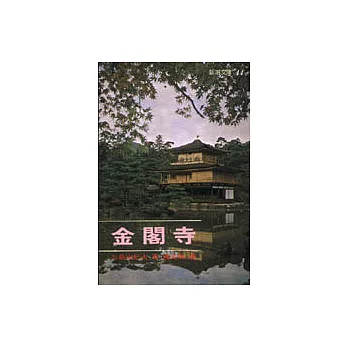
三島由紀夫Yukio Mishima著 《金閣寺》 (The Temple of the Golden Pavilion:With an introduction by Donald Keene; Translated from the Japanese by Ivan Morris)., RUNAWAY HORSES The Sea of Fertility 豐饒之海 (或空的幻景) (Marguerite Yourcenar)、太宰治 《愛的饑渴》43《金閣寺》44《三島由紀夫短篇傑作集》306
三島由紀夫(Yukio Mishima) 《金閣寺》 (The Temple of the Golden Pavilion:With an introduction by Donald Keene; Translated from the Japanese by Ivan Morris)., RUNAWAY HORSES The Sea of Fertility 豐饒之海 (或空的幻景) (Marguerite Yourcenar)、太宰治
“Perfect purity is possible if you turn your life into a line of poetry written with a splash of blood.” - from RUNAWAY HORSES
Yukio Mishima's THE TEMPLE OF THE GOLDEN PAVILION was first published by Alfred A. Knopf today in 1959. “Yet how strange a thing is the beauty of music! The brief beauty that the player brings into being transforms a given period of time into pure continuance; it is certain never to be repeated; like the existence of dayflies and other such short-lived creatures, beauty is a perfect abstraction and creation of life itself. Nothing is so similar to life as music.” http://www.penguinrandomhouse.com/…/the-temple-of-the-gold…/
Yukio Mishima was born on this day, January 14, in 1925. "Perfect purity is possible if you turn your life into a line of poetry written with a splash of blood." —Yukio Mishima, Runaway Horses
"What transforms this world is — knowledge. Do you see what I mean? Nothing else can change anything in this world. Knowledge alone is capable of transforming the world, while at the same time leaving it exactly as it is. When you look at the world with knowledge, you realize that things are unchangeable and at the same time are constantly being transformed." --from "The Temple of the Golden Pavilion" by Yukio Mishima
In The Temple of the Golden Pavilion, celebrated Japanese novelist Yukio Mishima creates a haunting portrait of a young man’s obsession with idealized beauty and his destructive quest to possess it fully. Mizoguchi, an ostracized stutterer, develops a childhood fascination with Kyoto’s famous Golden Temple. While an acolyte at the temple, he fixates on the structure’s aesthetic perfection and it becomes his one and only object of desire. But as Mizoguchi begins to perceive flaws in the temple, he determines that the only true path to beauty lies in an act of horrific violence. Based on a real incident that occurred in 1950, The Temple of the Golden Pavilion brilliantly portrays the passions and agonies of a young man in postwar Japan, bringing to the subject the erotic imagination and instinct for the dramatic moment that marked Mishima as one of the towering makers of modern fiction. With an introduction by Donald Keene; Translated from the Japanese by Ivan Morris.
Today in the 91st anniversary of the birth of Yukio Mishima. In The Temple of the Golden Pavilion, celebrated Japanese novelist Yukio Mishima creates a haunting portrait of a young man’s obsession with idealized beauty and his destructive quest to possess it fully...
Yukio Mishima died in Ichigaya, Tokyo, Japan on this day in 1970 (aged 45). "Japanese people today think of money, just money: Where is our national spirit today? The Jieitai must be the soul of Japan. … The nation has no spiritual foundation. That is why you don’t agree with me. You will just be American mercenaries. There you are in your tiny world. You do nothing for Japan. … I salute the Emperor. Long live the emperor!" --Mishima's final address the SPF Garrison at Ichigaya Camp during his failed coup attempt (1970)
Yukio Mishima’s "The Temple of Dawn" is the third novel in his masterful tetralogy, The Sea of Fertility 《豐饒之海》. Here, Shigekuni Honda continues his pursuit of the successive reincarnations of Kiyoaki Matsugae, his childhood friend.
AI Overview
Ivan Morris is the renowned translator of Yukio Mishima’s masterpiece,
The Temple of the Golden Pavilion (Kinkaku-ji). His English translation brings to life the story of a stuttering acolyte in postwar Japan obsessed with the beauty of a Kyoto temple, leading to his destructive act. Morris’s translation is widely acclaimed for rendering the novel’s intense, psychological tone.
Key details regarding the translation:
Context: The novel is based on the real 1950 incident where a young monk burned down Kyoto's famous Golden Pavilion.
Author: Yukio Mishima.
Translator: Ivan Morris.
Significance: Morris's translation is considered a definitive English version, often featuring an introduction by Donald Keene.
Plot: The protagonist, Mizoguchi, struggles with isolation and develops a fixation on the temple's perfection before deciding to destroy it.
The translation is available in numerous editions, including those from Tuttle Publishing, Penguin/Modern Classics, and Knopf.
瑪格麗特·尤瑟納爾(Marguerite Yourcenar,1903—1987),法國現代著名作家、學者。本名瑪恪麗特·德·克拉楊古爾(Marguerite de Crayencour),尤瑟納爾是作家與父親—起以姓氏字母重新組合后為自己起的筆名。16歲即以長詩《幻想園》嶄露頭角。在半個多世紀的時問里,她游歷了歐美多國。著有小說《哈德良回憶錄》、《苦煉》、《東方故事集》、《—彈解千愁》等;回憶錄《虔誠的回憶》、《北方檔案》;詩歌《火》等。1980年入選法蘭西學院,成為法蘭西學院成立三百五十年來第—位女院士。
Yukio Mishima was born Kimitake Hiraoka in Shinjuku, Tokyo, Japan on this day in 1925.
"What transforms this world is — knowledge. Do you see what I mean? Nothing else can change anything in this world. Knowledge alone is capable of transforming the world, while at the same time leaving it exactly as it is. When you look at the world with knowledge, you realize that things are unchangeable and at the same time are constantly being transformed."
— from THE TEMPLE OF THE GOLDEN PAVILION (1959)
In The Temple of the Golden Pavilion, celebrated Japanese novelist Yukio Mishima creates a haunting portrait of a young man’s obsession with idealized beauty and his destructive quest to possess it fully. Mizoguchi, an ostracized stutterer, develops a childhood fascination with Kyoto’s famous Golden Temple. While an acolyte at the temple, he fixates on the structure’s aesthetic perfection and it becomes his one and only object of desire. But as Mizoguchi begins to perceive flaws in the temple, he determines that the only true path to beauty lies in an act of horrific violence. Based on a real incident that occurred in 1950, The Temple of the Golden Pavilion brilliantly portrays the passions and agonies of a young man in postwar Japan, bringing to the subject the erotic imagination and instinct for the dramatic moment that marked Mishima as one of the towering makers of modern fiction. With an introduction by Donald Keene; Translated from the Japanese by Ivan Morris.
The Temple of the Golden Pavilion (金閣寺Kinkaku-ji) is a novel by the Japanese author Yukio Mishima. It was published in 1956 and translated into English by Ivan Morris in 1959.
The novel is loosely based on the burning of the Reliquary (or Golden Pavilion) of Kinkaku-jiin Kyoto by a young Buddhist acolyte in 1950. The pavilion, dating from before 1400, was a national monument that had been spared destruction many times throughout history, and the arson shocked Japan.
 常常收到有「讀書共和國」名號的信封,
 撈到 2022 年台大哲學系的訪問,來紀念一下:
 「在台灣,你要出去唸電腦,人家總覺得你終於走向一個『正途』
 「郭社長語重心長地形容:「工作和所學相關性不大,
 「這一路走來……,今天已經走到了七十幾歲了,