His first notable work was a comedy short Chess Fever (1925) co-directed with Nikolai Shpikovsky. José Raúl Capablanca played a small part in it, with a number of other cameos presented. In 1926 he directed what would become one of the masterpieces of silent movies: Mother, where he developed several montage theories that would make him famous. Both movies featured Pudovkin's wife Anna Nikolaevna Zemtsova in supporting female parts (she left cinema shortly after).
The film is not shot, but built, built up from the separate strips of celluloid that are its raw material.
Vsevolod Illarionovich Pudovkin (Russian: Всеволод Илларионович Пудовкин, IPA: [ˈfsʲevələt ɪlərʲɪˈonəvʲɪtɕ pʊˈdofkʲɪn]; 16 February 1893 – 30 June 1953)[1][2] was a Russian and Sovietfilm director, screenwriter and actor who developed influential theories of montage.[3] Pudovkin's masterpieces are often contrasted with those of his contemporary Sergei Eisenstein, but whereas Eisenstein utilized montage to glorify the power of the masses, Pudovkin preferred to concentrate on the courage and resilience of individuals. He was granted the title of People's Artist of the USSR in 1948.
The Latin cogito, ergo sum, usually translated into English as "I think, therefore I am",[a] is the "first principle" of René Descartes's philosophy. He originally published it in French as je pense, donc je suis in his 1637 Discourse on the Method, so as to reach a wider audience than Latin would have allowed.[1]
The Scottish philosopher John Macmurray rejects the cogito outright in order to place action at the center of a philosophical system he entitles the Form of the Personal. "We must reject this, both as standpoint and as method. If this be philosophy, then philosophy is a bubble floating in an atmosphere of unreality."[61] The reliance on thought creates an irreconcilable dualism between thought and action in which the unity of experience is lost, thus dissolving the integrity of our selves, and destroying any connection with reality. In order to formulate a more adequate cogito, Macmurray proposes the substitution of "I do" for "I think," ultimately leading to a belief in God as an agent to whom all persons stand in relation.
Hello, We have re-evaluated your blog against Blogger Community Guidelines https://blogger.com/go/contentpolicy. Upon review, the blog has been reinstated. You may access the blog at http://hcbookstory.blogspot.com/. Thank you for understanding. Sincerely, The Blogger Team
----
Hello, As you may know, our Community Guidelines (https://blogger.com/go/contentpolicy) describe the boundaries for what we allow-- and don't allow-- on Blogger. Your blog titled "http://hcbookstory.blogspot.com/" was flagged to us for review. We have determined that it violates our guidelines and have made the URL http://hcbookstory.blogspot.com/ unavailable to blog readers. Why was your blog removed? Your content has violated our SPAM policy. Please visit our Community Guidelines page linked in this email to learn more. If we feel that a blog's content does not fit within the expectations of our Policy, we no longer allow it to be publicly available. If you think we've made a mistake, you can request a review at https://www.blogger.com/unlock-blog.g?lockedBlogID=6515099295195288484, and we'll take another look. Sincerely, -The Blogger Team
2025 Jane Austen 250 周年...autumnal festival will be themed around Jane Austen's last completed novel, Persuasion。 Darcy...Jennifer Ehle as Elizabeth Bennet
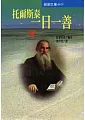
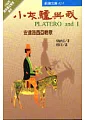
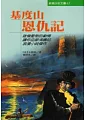
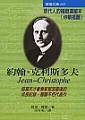
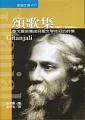
This autumnal festival will be themed around Jane Austen's last completed novel, Persuasion, with a particular focus on poetry, walking and nature. Visitors can ... 《勸服》【譯藝】【漢清書話:從「新潮文庫」說起 The Story of Some Books 】兩blogs告別梁祥美女士:《托爾斯泰一日一善》(分春夏秋冬4本) 及〈譯者序〉;《羅素短論集》《史懷哲自傳》《小灰驢與我 》《勸服》《頌歌集》等等
梁祥美女士是「新潮文庫」的主要翻譯者之一。(漢清書話:從「新潮文庫」說起 The Story of Some Books 內有篇簡介各大譯者:新潮文庫其它大譯家:蕭逢年(齊、吳 )、宣誠、徐進夫、楊耐冬、蔡伸章、梁祥美、鍾玉澄、鍾肇政、孟祥森、金溟若、劉大悲、劉森堯、方瑜 、李永熾、廖運範......)
(協志工業叢書: 社會129 Epictetus著 The Teaching of Epictetus;The Enchiridion by EpictetusThe Internet Classics Archive | (By Epictetus Written 135 A.C.E.. Translated by Elizabeth Carter. 1. Some things are in our control and others not. Things in our control are opinion, pursuit, desire ...classics.mit.edu/Epictetus/epicench.html)


.png)

 借閱次數 :
 ▶ 21:13